
In Fall '18 and later, attributes for technical products can be set as not assetizable (to identify temporary data) and encrypted (to protect personally identifiable information or similar data).
Is Not Assetizable
The Is Not Assetizable attribute metadata flag is useful for transitory information that shouldn’t persist or doesn’t need to persist beyond completion of order management where assetization would usually occur. This metadata flag is stored in Order Management, not in the Salesforce platform.
An example of transitory information is the initial password that a customer uses to log in to the provider's website for the first time. During fulfillment, the initial password is generated within an orchestration order item, then saved on the technical fulfillment request line, which is then passed to the next orchestration item that emails the password to the customer. The password doesn’t need to persist at the end of order management. Other information that doesn’t need to persist can be the result of back-end services connected to order items that don’t become customer assets, such as a service needed to fulfill a customer’s order. As an example, there might be a check to see whether a required modem is in stock and on the delivery vehicle. This information is not needed after that check has been made.
Is Encrypted
The Is Encrypted attribute metadata flag is used to protect personally identifiable information (PII) and other data such as the customer name, phone number, social security number, and so on. These pieces of information can be captured as attributes and should be sent downstream only for legitimate purposes. You can use the encrypted flag to indicate the PII or other information must be stored securely.
Setting Is Not Assetizable and Is Encrypted
Is Not Assetizable and Is Encrypted are attribute metadata flags. You set these flags when an attribute is assigned to an object type in Vlocity Product Designer or Vlocity Product Console. These flags can only be set when the Run-time Configurable flag is also set. After the attribute is marked as Run-time Configurable, you can then set Is Not Assetizable or Is Encrypted or both.
If none are selected, attribute values are stored in the technical inventory after decomposition. If both are selected, the attribute is encrypted during processing and not stored with the inventory items. However, if you set the Is Encrypted flag to True, and Is Not Assetizable to False, the attribute is stored in the technical inventory, but the attribute is encrypted. Technical assetization stores the output of decomposition into the technical tables in Order Management, not in the Salesforce platform.
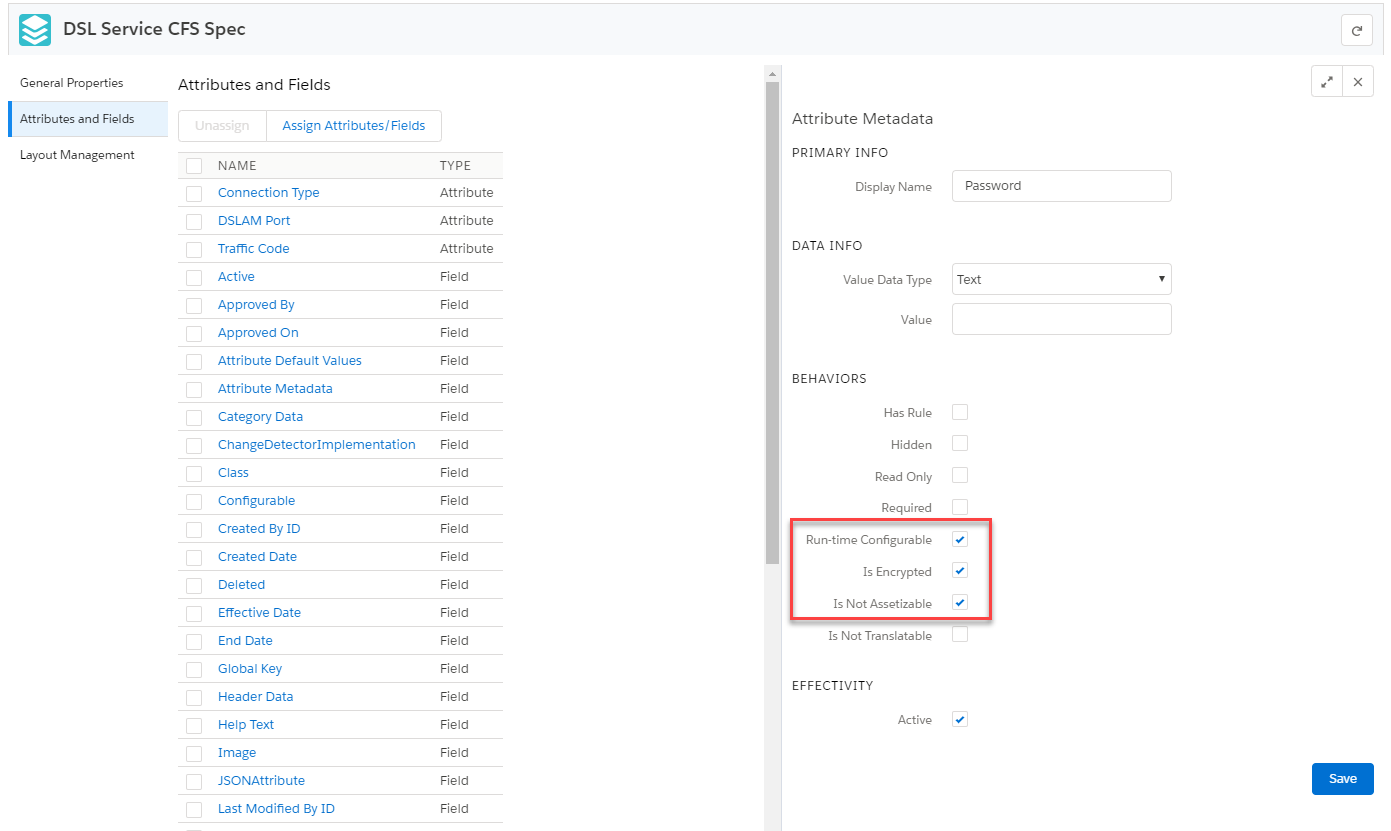
After assigned to the object type, every product that is created in that object type inherits these metadata flags, with the other attribute and metadata. Is Not Assetizable, Is Encrypted and Run-time Configurable are then non-overridable at the product level. This prevents any product manager or EPC administrator from removing these flags during product creation.
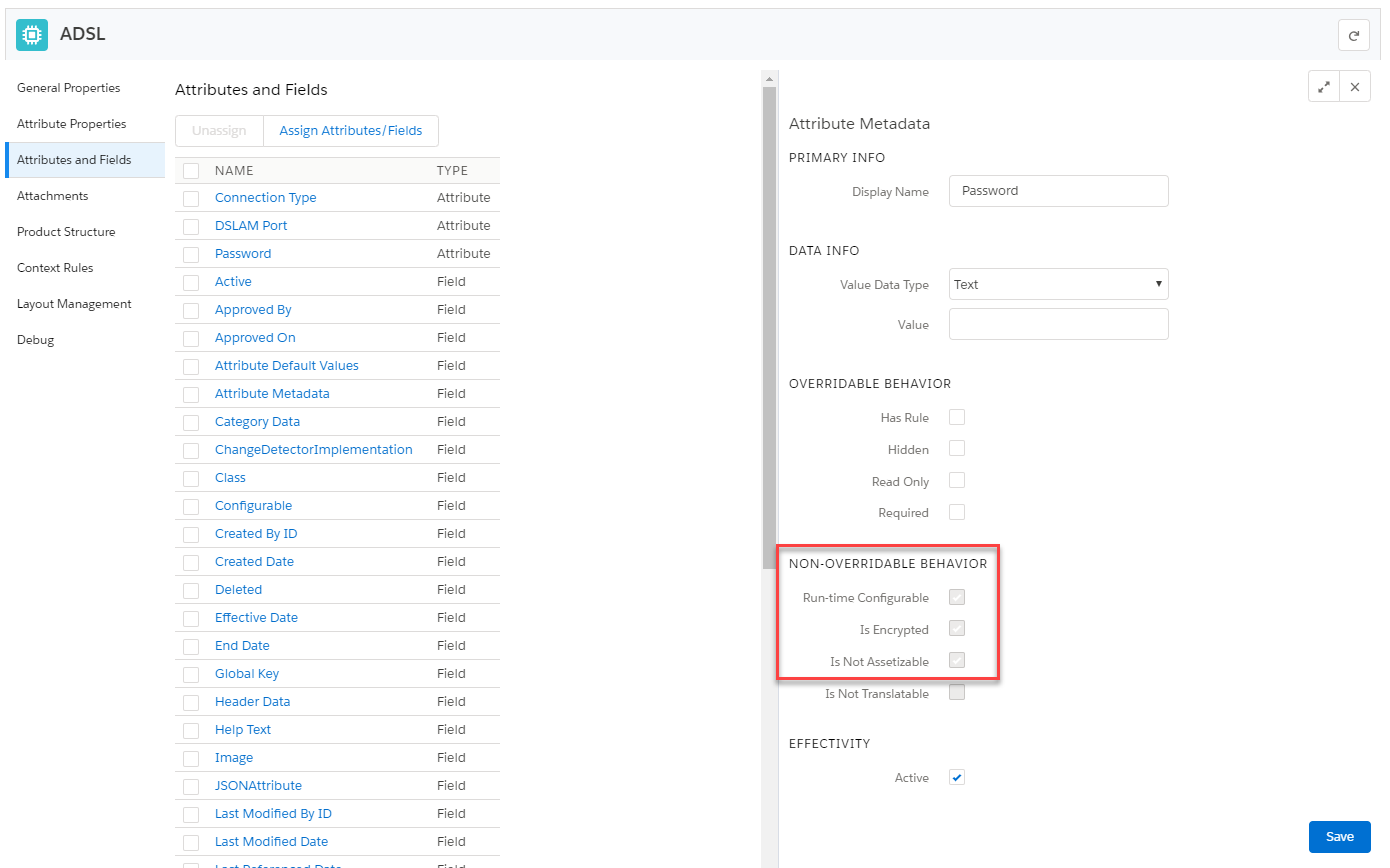
If you set these flags on existing attributes, it does not affect attributes that are already stored in existing technical inventory.
Is Not Assetizable and Is Encrypted metadata flags are intended to trigger functions in downstream order management systems, such as Industries Order Management Plus. There is no encryption to these attributes when used on commercial products in Industries CPQ or in Order Management, and the information remain stored and accessible on the originating order. Consequently, these attribute flags are intended for use in technical products only.
Is Not Assetizable and Is Encrypted
Once these attribute metadata flags have been set on an object type and inherited by a product, you must create decomposition rules to map the attributes to the downstream fulfillment requests, which are the basis for the technical inventory. See Partial Assetization of Product Attributes .